
Confidential Prototype Manufacturing With NDA Protection
Protecting confidential CAD files, unreleased product information and physical prototypes throughout the prototype manufacturing process — from the first project discussion through manufacturing, finishing, assembly and delivery.
You do not need to send sensitive CAD files first. Start with general project information. If confidentiality is required, an NDA can be addressed before detailed technical files are shared.
Project information is used by the personnel involved in communication, quotation, project review and manufacturing.
Confidentiality is more than signing an NDA. It also concerns how project information is shared with relevant personnel, how physical prototypes are handled during manufacturing, and how access to prototype manufacturing areas is managed.
Prototype Projects Often Begin Before the Product Is Public
Prototype manufacturing often takes place while a product is still being developed, evaluated or prepared for release. At this stage, the information shared with a prototype manufacturer can reveal far more than the specifications of an ordinary production part.
The Product May Not Yet Be Public
A prototype may represent a product that has not yet been announced, launched or shown to the market. Its appearance, structure and product concept may therefore still be commercially sensitive.
Unreleased Product InformationEngineering Information Is Still Evolving
During development, customers may need to share information about geometry, internal structures, assembly relationships, components, materials or appearance requirements so that a physical prototype can be manufactured correctly.
Development InformationConfidential Designs Become Physical Objects
Once manufacturing begins, confidential information is no longer represented only by digital files. Prototype parts, finished surfaces, internal structures and assembled models can also reveal details of an unreleased product.
Physical Prototype InformationAn NDA establishes an important confidentiality framework, but prototype projects also involve project files, relevant personnel, manufacturing activities, physical prototypes and access to production areas. For this reason, confidentiality needs to be considered throughout the prototype manufacturing process.
Customers do not need to begin by sending sensitive CAD data. If confidentiality is required, the next step can be to arrange an NDA before detailed drawings, CAD files and other sensitive project information are provided.
An NDA Can Be Arranged Before You Share Sensitive CAD Files
You do not need to send confidential CAD models, detailed drawings or unreleased product information simply to begin a conversation with Hemtom. Start with general project information and, when confidentiality is required, address the NDA before detailed technical files are shared.
General information about the prototype, quantity, material or manufacturing requirements can be used to begin the conversation. Sensitive product details can follow after the appropriate confidentiality arrangement is in place.
Project Without an NDA Requirement
If your project does not require an NDA, detailed project information can be provided directly for review.
Tell us what you need to manufacture and the basic project requirements.
Provide the technical files required for manufacturing review.
Materials, processes, finishing, quantity and other relevant requirements can be reviewed.
The proposed prototype manufacturing scope and quotation can then be prepared.
Project Requiring an NDA
When the project contains sensitive or unreleased product information, confidentiality can be addressed before detailed technical files are provided.
Begin without disclosing the sensitive technical details you want protected.
Address confidentiality before sensitive CAD files, drawings and detailed project information are shared.
Once the confidentiality arrangement is in place, provide the technical information required for project review.
Hemtom can then review the manufacturing requirements and prepare the appropriate project scope and quotation.
If you need a confidentiality agreement before sharing detailed project information, ask Hemtom about arranging an NDA.
If your company uses its own NDA, you can send the agreement to Hemtom for review before sensitive project files are provided.
You can begin with non-sensitive information such as the general type of prototype, approximate quantity, material category, manufacturing needs and whether an NDA is required. Detailed geometry, proprietary structures and other confidential information can be provided later.
The next confidentiality question is not only what information you send, but also who needs access to that information to complete your project. Hemtom shares project information with relevant personnel involved in communication, quotation, project review and manufacturing.
Your Project Information Is Shared With the People Who Need It to Do the Work
Manufacturing a prototype requires different people to perform different parts of the project. Project information is therefore shared with relevant personnel according to their role in communication, quotation, project review and manufacturing.
Information You May Need to Share
The exact information depends on the prototype and the work required.
Access Based on Project Responsibility
Different stages of the project require different personnel to understand the information necessary for their work.
Project Communication
Personnel responsible for customer communication may need project information to understand requirements, revisions, questions and customer instructions.
Quotation & Project Review
Relevant personnel may review the information required to evaluate materials, processes, quantity, finishing and the manufacturing scope for quotation.
Production Engineering
Engineers involved in manufacturing may need the relevant technical information to produce, fit, finish or assemble the prototype according to project requirements.
Customer CAD files, drawings and project information are used by relevant personnel involved in completing the project. This can include the people responsible for customer communication, quotation and project review, as well as the engineers responsible for manufacturing.
Protecting project information is only one part of prototype confidentiality. Once manufacturing begins, confidential CAD data becomes physical parts, surfaces, internal structures and assembled prototypes. Confidentiality therefore needs to continue into the manufacturing stage.
Confidentiality Continues From CAD to the Physical Prototype
Once a project enters manufacturing, confidential information is no longer represented only by CAD files and drawings. Geometry, internal structures, surface details and assembly relationships begin to exist as real prototype parts and physical models.
A confidential CAD model may become machined parts, hand-finished surfaces, painted components, assembled models and inspected physical prototypes. For prototype manufacturing, confidentiality therefore needs to be considered beyond the digital file itself.
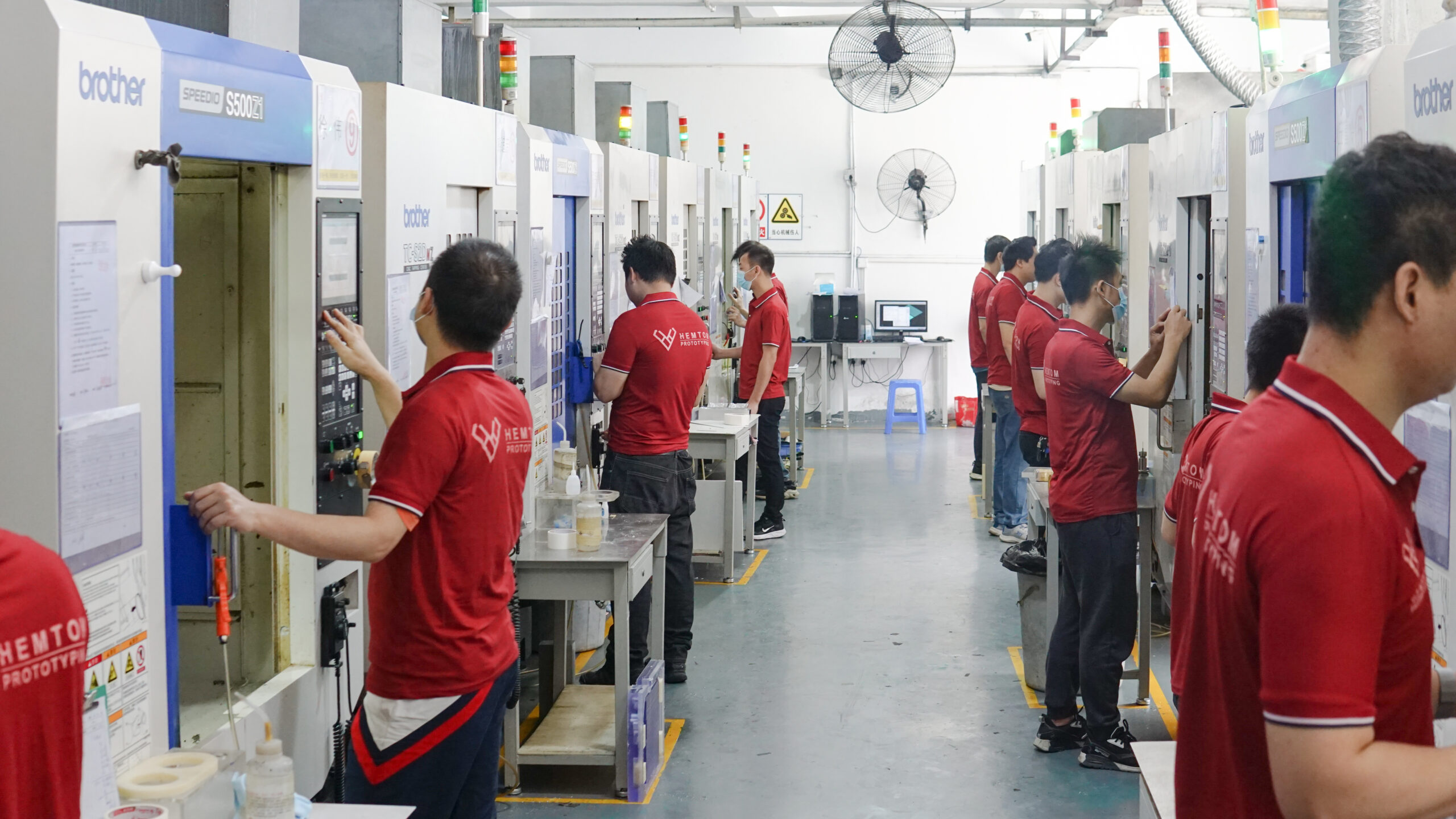
Hemtom CNC Workshop
CAD Becomes a Physical Part
Manufacturing is the point where digital product geometry begins to become a real object. The engineers involved in production use the relevant technical information required to manufacture the prototype according to the project requirements.
Manual Part Finishing
Prototype parts may require hands-on work such as deburring, fitting and surface preparation after machining. At this stage, the physical part itself can already reveal details of the customer's product design.
Surface Finishing & Painting
Appearance prototypes may move through manual surface preparation and painting processes. Color, texture and exterior appearance can also form part of a customer's unreleased product information.
Hands-On Prototype Work
Prototype manufacturing can involve skilled manual work in addition to machine processing. Relevant project personnel work with the physical parts as required by the manufacturing and finishing process.
Prototype Inspection
Physical parts are checked during the prototype process. At this stage, dimensions, geometry and finished components exist as tangible representations of the customer's design.
Drawings
& Painting
Assembly
Prototype
A finished appearance model, structural prototype or assembled functional prototype can reveal product geometry, exterior design, internal relationships, component positions and CMF decisions. This is why prototype confidentiality needs to extend into the physical manufacturing environment rather than focusing only on digital files.
Once confidential projects exist inside a real manufacturing environment, another question becomes important: how is access to prototype manufacturing areas handled? The next section explains Hemtom's workshop entry and visitor process.
Controlled Access to Confidential Prototype Workshops
Protecting a confidential prototype project also means controlling who can enter the areas where unreleased physical prototypes are manufactured and handled. Hemtom separates confidential production areas from general customer visit and project review activities.
The confidential production workshop is not a general-access area. Only personnel responsible for production work on the relevant projects are permitted to enter. Other personnel — and visiting customers — do not enter the confidential production workshop.
Personal Belongings Storage
Store Personal Belongings & Devices
Personal belongings and devices are stored before relevant production personnel proceed toward the confidential workshop area.
Security Check Before Entry
Check for Carried Devices
Before entering the confidential workshop, security personnel check employees for devices being carried into the production area.
Only Relevant Production Personnel Enter the Confidential Workshop
After the entry procedure, workshop access is limited to personnel whose production responsibilities require them to work on the relevant projects. Personnel who are not involved in the production work are not permitted to enter the confidential workshop.
Personnel whose manufacturing responsibilities require access to the confidential production area.
The confidential workshop is not opened as a general visitor or customer project-review area.
Visiting Customers Do Not Enter the Confidential Workshop — Even to Review Their Own Project
The confidential workshop may contain prototype projects belonging to multiple customers at the same time. For this reason, a visiting customer is not taken into the confidential production workshop simply to inspect their own prototype. Instead, Hemtom can bring that customer's project to a designated area on the third floor for project viewing, discussion and review.
Hemtom
Is Prepared for Review
Designated Third-Floor Area
Confidential Workshop
Camera Monitoring in the Confidential Workshop
Camera monitoring is used within the confidential workshop as another part of the physical workshop management environment. Together with controlled entry procedures, it supports the management of areas where confidential physical prototypes are manufactured and handled.
Belongings & Devices
Check
Access Requirement
Production Workshop
Hemtom separates confidential production access from customer project review. When you visit, your own project can be brought to a designated area for review without requiring access to the confidential workshop where other customers' projects may be in production. The same principle helps prevent other visiting customers from entering the confidential production area while projects are being manufactured there.
Customers Can Visit Hemtom Without Entering Confidential Production Areas
Customers may visit Hemtom to meet the team, discuss projects and understand our prototype manufacturing capabilities. A customer visit, however, does not provide unrestricted access to confidential production areas.
Hemtom may be manufacturing confidential prototypes for multiple customers at the same time. Customer meetings, capability reviews and project discussions can therefore take place without opening the confidential production workshop to visiting customers.
Project Discussion
Face-to-Face Project Discussion
Visiting customers can sit down with the Hemtom team to discuss project requirements, manufacturing questions and prototype development details.
Sample Room Review
Review Prototype Samples & Workmanship
Customers can review Hemtom's prototype samples and examine manufacturing and finishing details to better understand our prototype capabilities.
Customer Visit
Meet the Hemtom Team
Factory visits give customers an opportunity to meet Hemtom personnel in person and build a clearer understanding of the company behind their prototype work.
Verify Capability Without Opening Confidential Production Areas
Meet with Hemtom personnel to discuss project requirements, questions and prototype expectations.
Examine prototype samples and workmanship to understand manufacturing and surface-finishing capabilities.
When project review is required, the customer's own prototype can be brought to the designated third-floor area for viewing and discussion.
If a visiting customer needs to inspect or discuss their own prototype, Hemtom can bring that customer's project out of the confidential production workshop and into the designated third-floor review area. This allows the customer to review their project without entering an area where prototypes belonging to other customers may also be in production.
Hemtom
Is Prepared for Review
Designated Third-Floor Area
The separation between customer visits and confidential production areas is designed around a simple principle: visiting Hemtom should not require access to another customer's confidential prototype work. Customers can communicate with the team, review Hemtom's prototype capabilities and inspect their own project in the designated review area while confidential production remains separate.
Confidentiality Does Not Stop After the NDA Is Signed
An NDA establishes an important confidentiality framework, but a prototype project continues beyond the document itself. Project information becomes manufacturing information, manufacturing information becomes physical parts, and those parts eventually become a prototype that can reveal the product itself.
During prototype development, confidential information can exist as CAD files, engineering drawings, manufacturing information, unfinished parts, finished surfaces and assembled physical prototypes. The form changes as the project progresses, but confidentiality remains relevant throughout the process.
NDA & Project Information
Confidentiality can begin before detailed technical information is shared. General project information can be discussed first, with an NDA arranged when required before sensitive project files are provided.
- General Project Discussion
- NDA When Required
- CAD & Engineering Drawings
- Need-to-Know Project Access
Files Become Physical Prototypes
Once production begins, confidential design information starts appearing in physical form. Prototype parts, surfaces, structures and assemblies can reveal details of an unreleased product.
- Prototype Manufacturing
- Manual Finishing
- Painting & Appearance Work
- Physical Prototype Inspection
Workshop Access & Customer Visits
Confidential physical prototypes also require consideration of who can enter production areas and how visiting customers review projects without accessing other customers' confidential work.
- Controlled Workshop Entry
- Relevant Production Personnel Only
- Customer Visits Kept Separate
- Designated Project Review Area
Project Information
Manufacturing Activity
Physical Prototype
The goal is not simply to sign an NDA and consider confidentiality complete. From the first sensitive project information to manufacturing, physical prototype handling and customer review, confidentiality remains part of how the project is handled.
From initial discussion to prototype manufacturing and project review, confidentiality should follow the project — not just the document.
Have a Confidential Prototype Project?
You do not need to send confidential CAD files just to start a conversation with Hemtom. Begin with general project information. If your project requires an NDA, confidentiality can be addressed before detailed drawings, CAD files or other sensitive technical information are shared.
At the initial stage, you can provide enough general information for Hemtom to understand the type of prototype support you are looking for. Detailed confidential CAD data does not need to be the first thing you send.
Ready to Discuss Your Prototype?
If an NDA is not required before technical review, you can start the project discussion and provide the information needed for Hemtom to understand your prototype requirements.
Information
& Drawings
& Quotation
Need an NDA Before Sharing CAD?
Start with general, non-sensitive project information and let us know that confidentiality needs to be addressed before detailed technical files are shared.
Information
NDA First
Project Files
Tell us what you are trying to prototype and whether confidentiality needs to be addressed before detailed files are provided.
No confidential CAD files are required to make the first contact. Start with general project information and indicate if an NDA needs to be addressed before detailed technical information is shared.