
Plastic Prototype Manufacturing for Product Development
Turn your CAD files into high-quality plastic prototypes for appearance, fit, functional testing, and product validation before moving to production.
Hemtom manufactures plastic prototypes using CNC machining, SLA 3D printing, vacuum casting, and prototype molding, with finishing and assembly options for product development.
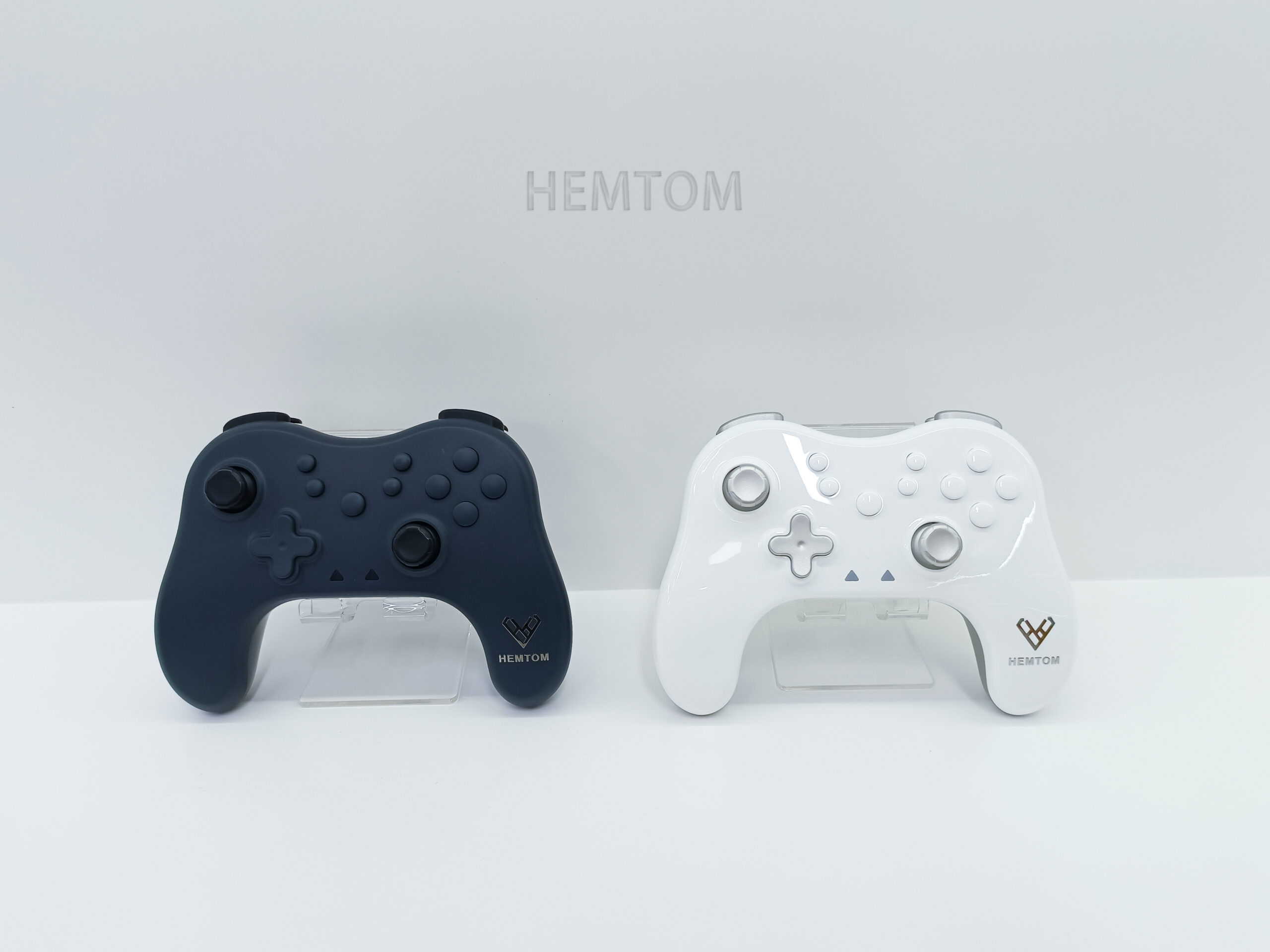
What Do You Need to Validate With Your Plastic Prototype?
A plastic prototype can serve different purposes during product development. You may need to evaluate the appearance, verify dimensions and assembly, test physical functions, or prepare a near-production sample before tooling.
Tell us what you need to validate. We can help match your CAD design with the appropriate prototype type, manufacturing process, material, and finishing requirements.
Appearance Prototype
Need to see and present the product before production?
Create a physical model to evaluate product proportions, colors, textures, surface finishes, and overall visual appearance before committing to production tooling.
- Form and proportions
- Color and surface finish
- Ergonomics and visual evaluation
- Presentation and product photography
Functional Plastic Prototype
Need to test how the product works?
Build prototypes around the functions that matter to your product, including moving components, buttons, mechanisms, mating parts, threads, and other functional features.
- Functional movement
- Buttons and interfaces
- Threads and mating components
- Assembly and functional testing
Structural Plastic Prototype
Need to verify fit, dimensions, or internal structure?
Use physical prototypes to check dimensional relationships, component interfaces, enclosure structures, and assembly before moving further into product development.
- Dimensional verification
- Fit and component interfaces
- Enclosure and internal structure
- Assembly verification
Pre-Production Plastic Prototype
Need a sample closer to your production product?
When appearance, material behavior, assembly, and manufacturability all matter, a pre-production prototype can help your team evaluate the design before committing to larger-scale production.
- Production-oriented materials
- Final appearance evaluation
- Assembly and fit checks
- Manufacturing validation
Not sure which prototype type you need?
You do not need to choose the manufacturing process before requesting a quote. Send us your CAD files and explain what you need to evaluate. We can review the project requirements and recommend a suitable prototype approach.
Choose the Right Manufacturing Method for Your Plastic Prototype
Different plastic prototypes require different manufacturing approaches. The right process depends on your part geometry, quantity, functional requirements, surface finish, material requirements, and stage of product development.
Hemtom uses several prototype manufacturing methods so your plastic parts can be produced according to what you need to evaluate, rather than forcing every project into one process.
CNC Plastic Prototyping
CNC machining removes material from plastic stock to create precise prototype parts. It is suitable when dimensional accuracy, real engineering plastics, machined features, or functional testing are important.
- Functional and structural prototypes
- Precise mating components
- Threads, holes, and machined features
- Engineering plastic materials
SLA Plastic Prototyping
SLA 3D printing builds plastic prototypes layer by layer from photopolymer resin. It is useful for detailed geometries, visual evaluation, and prototypes where complex shapes are difficult or inefficient to machine.
- Complex and detailed geometries
- Appearance prototypes
- Early-stage design validation
- Rapid prototype iterations
Vacuum Casting
Vacuum casting uses a master pattern and silicone tooling to reproduce multiple plastic prototype parts. It is useful when you need several highly finished parts with consistent appearance and properties for testing or presentation.
- Multiple prototype units
- Detailed appearance models
- Enclosures and assembled products
- Small-batch prototype production
Prototype Injection Molding
Prototype injection molding can produce plastic parts using molding processes when your development stage requires a closer representation of injection-molded production parts. It can be considered when material behavior, geometry, and production-oriented evaluation are important.
- Production-oriented prototypes
- Functional part evaluation
- Multiple identical prototype parts
- Pre-production validation
Start With What You Need to Test
The same plastic part can sometimes be produced using different processes. The better choice depends on what you need to learn from the prototype, how many units you need, the required material and finish, and how close the prototype needs to be to the final product.
Which Plastic Prototyping Method Is Right for Your Project?
There is no single plastic prototyping process that is right for every project. The best approach depends on what you need to validate, how many parts you need, the required material properties, geometry, and the level of appearance or production similarity required.
| Project Requirement | CNC Plastic Prototyping Machined from plastic stock | SLA 3D Printing Layer-by-layer resin printing | Vacuum Casting Silicone mold + polyurethane casting | Prototype Injection Molding Production-oriented molding |
|---|---|---|---|---|
| Complex geometry | Good for many machined geometries, but limited by cutting-tool access. | Well suited to complex and detailed shapes. | Suitable for detailed parts reproduced from a master pattern. | Suitable when the geometry is designed for molding. |
| Dimensional & functional testing | Strong choice for functional and dimensional evaluation. | Suitable when the selected resin meets the testing requirements. | Useful for assembly and limited functional evaluation. | Useful when production-style molding behavior needs to be evaluated. |
| Appearance evaluation | Can produce high-quality machined surfaces with additional finishing. | Suitable for detailed visual models and early design evaluation. | Well suited to multiple finished appearance prototypes. | Suitable when production-like molded appearance is important. |
| Multiple prototype units | Suitable when machined parts meet the project requirements. | Practical for iterations and smaller quantities. | Particularly useful when several similar prototype parts are needed. | Becomes more relevant when multiple identical parts are required. |
| Material requirements | Uses available engineering and production-grade plastic stock. | Uses photopolymer resins selected for the intended prototype purpose. | Uses casting resins selected to reproduce the required appearance or properties. | Can evaluate production-oriented thermoplastic materials. |
| Tooling requirement | No dedicated mold is required. | No dedicated mold is required. | Requires a master pattern and silicone mold. | Requires tooling or prototype tooling. |
| Best development stage | Functional and engineering validation | Early design and rapid iteration | Appearance validation and small prototype batches | Pre-production and molding validation |
Start With What You Need to Test
You do not need to select the manufacturing process before contacting Hemtom. Tell us what you need to evaluate, how many prototypes you need, and what material, finish, or functional requirements matter. Send your CAD files and our team can review the project requirements and determine a suitable prototyping approach.
Choose the Right Plastic for Your Prototype
Material selection should follow the purpose of your prototype. A visual model may need a different plastic from a part that will be assembled, loaded, exposed to impact, or tested for transparency. Hemtom works with a range of engineering and production plastics to match the material requirements of your prototype.
ABS
Balanced strength, toughness and machinability
ABS is a versatile thermoplastic commonly used for housings, enclosures and general-purpose prototype parts where a balance of strength, appearance and manufacturability is required.
- Good balance of strength and toughness
- Suitable for CNC machining and molding applications
- Useful for housings and consumer product prototypes
PC / Polycarbonate
Toughness, impact resistance and transparency
Polycarbonate is useful when a prototype needs higher impact resistance or transparent material properties. It is often selected for functional parts and clear components.
- High impact resistance
- Available for transparent prototype applications
- Suitable for demanding functional prototypes
PMMA / Acrylic
Optical clarity and appearance-focused prototypes
PMMA, also known as acrylic, is commonly selected for transparent or appearance-driven plastic prototypes where visual clarity and surface quality are important.
- High visual clarity
- Suitable for transparent components
- Can be polished for improved surface appearance
POM / Acetal
Low friction and dimensional stability
POM is often considered for mechanical prototype components that require low friction, wear resistance and stable dimensions during functional evaluation.
- Good wear resistance
- Low-friction characteristics
- Suitable for precision mechanical components
Nylon / PA
Mechanical strength and wear resistance
Nylon can be suitable for functional prototype components where toughness, mechanical performance and wear resistance are more important than a cosmetic surface.
- Good mechanical performance
- Useful for moving and load-bearing components
- Available in different grades and configurations
PP / Polypropylene
Lightweight and flexible thermoplastic
PP is useful when the prototype needs characteristics closer to polypropylene production parts, particularly where low weight, flexibility or chemical resistance is relevant.
- Low density and lightweight
- Useful where flexibility is required
- Suitable for selected functional applications
Need a Different Engineering Plastic?
Hemtom also works with materials such as PEEK, PC+GF, ABS+PC, ABS+GF and other engineering plastics. Material availability and suitability depend on the manufacturing process and the requirements of your prototype.
Material selection depends on the prototype's function, manufacturing process, geometry, required finish and testing conditions. If the final production material is already specified, include it with your CAD files when requesting a quote.
Functional Plastic Prototypes for Real-World Testing
A functional prototype needs to do more than look like the final product. It may need to fit with other components, support moving parts, accept fasteners, seal against an O-ring, or allow users to interact with the product. Hemtom can manufacture plastic prototype components around the functional requirements you need to validate.
Fit & Assembly Verification
Check whether individual components fit together as intended before committing to production tooling or larger quantities.
- Part-to-part fit
- Housing and enclosure assembly
- Screw and fastener interfaces
- Component alignment
Threads, Seals & Mechanical Features
Prototype parts can include functional details that need to be evaluated during assembly and use, rather than being represented only as visual features.
- Internal and external threads
- O-ring interfaces
- Mounting features
- Mechanical mating surfaces
User Interaction & Operation
Product prototypes can be manufactured to support physical interaction so teams can evaluate how the product feels and operates during use.
- Pressable buttons
- Moving components
- Switch and control interfaces
- Ergonomic interaction
Multi-Component Prototypes
When a product consists of multiple plastic components, the prototype can be manufactured as an assembled system rather than as isolated parts.
- Multi-part assemblies
- Housing and internal components
- Moving interfaces
- Assembly sequence evaluation
Transparent & Appearance-Critical Parts
Some functional prototypes also need to communicate the appearance and user experience of the final product through transparent, polished or specially finished components.
- Clear or translucent components
- Polished transparent surfaces
- Color and finish evaluation
- Appearance and function together
Functional Enclosure Prototypes
Product housings can be prototyped with the mechanical interfaces needed to evaluate internal component placement, assembly and real-world product interaction.
- Electronic product housings
- Internal component clearance
- Mounting points
- Access and service features
Move From “Does It Look Right?” to “Does It Work?”
Functional prototyping allows your team to evaluate physical interfaces and product behavior before moving into production. The exact capabilities depend on the selected material, manufacturing process, geometry and test requirements.
What About Electronics and Internal Components?
Hemtom manufactures the physical prototype and can assist with assembly when the required internal components are supplied by the customer. For electronic products, customers should provide the PCB, electronics, display or other internal components required for the functional build. Hemtom does not provide PCB design, electronic development or software development as part of plastic prototype manufacturing.
Have a Functional Requirement?
Tell us what the prototype needs to do, not only what it needs to look like. Include your CAD files, material requirements and any important assembly, sealing, movement or interaction requirements so the prototype can be planned around the actual validation objective.
Make Your Plastic Prototype Look
Closer to the Final Product
A prototype is not always finished when the plastic part comes out of the machine. For appearance evaluation, product presentations, assembly reviews, and customer demonstrations, the surface finish, color, texture, and visual details can be just as important as the underlying part.
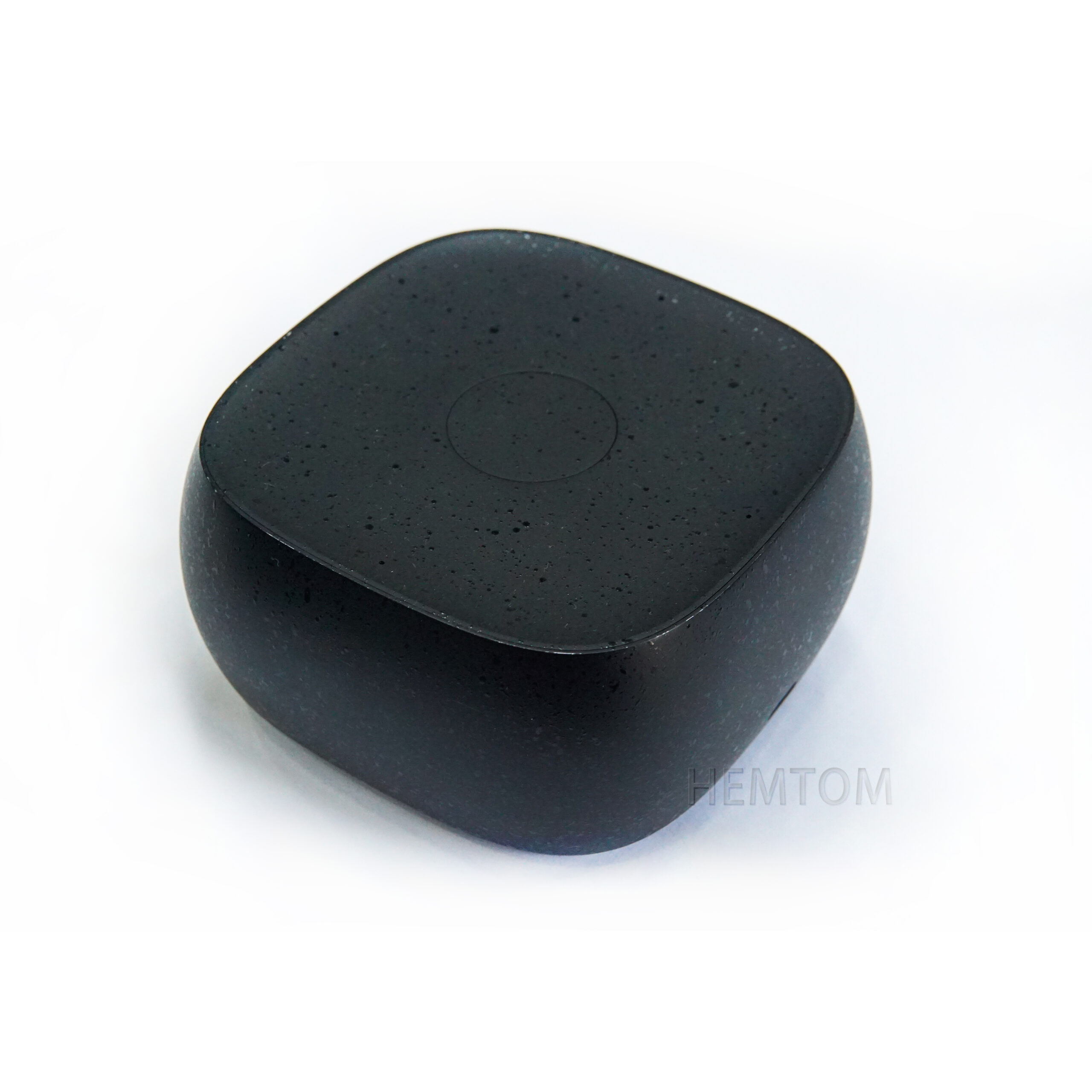
From Raw Prototype to Presentation-Ready Model
The same plastic prototype can look completely different depending on how its surface is processed. Hemtom can combine manufacturing and finishing steps to help you achieve the appearance required for design review, functional demonstration, presentation, or pre-production evaluation.
Finishing requirements can be specified together with your CAD files, material requirements, color references, and functional requirements so the prototype is produced as a complete physical model rather than simply an unfinished machined or printed part.
Sanding & Polishing
Refine visible surfaces and reduce machining or printing marks when a smoother, cleaner appearance is required.
- Smooth visible surfaces
- Remove machining marks
- Prepare surfaces for painting
- Polish selected plastic surfaces
Painting & Color Matching
Add the required color and visual appearance when the prototype needs to represent the intended product design.
- Custom product colors
- Color reference matching
- Single or multiple colors
- Matte or gloss appearance
Transparent & Clear Surfaces
Transparent or translucent plastic components may require additional surface refinement when optical appearance is part of the evaluation.
- Clear plastic components
- Translucent appearance
- Polished transparent surfaces
- Visual inspection of internal features
Texture & Surface Appearance
Surface texture can change the way a product feels and looks. Finishing can therefore be considered as part of the prototype specification rather than an afterthought.
- Matte surface effects
- Textured surfaces
- Visual surface consistency
- Product-specific appearance requirements
Metallic Appearance
When a plastic component needs to visually represent a metallic product surface, finishing can be used to create the required appearance for design and presentation evaluation.
- Metallic visual effects
- Decorative finishes
- Premium product appearance
- Design presentation models
Graphics & Product Details
Product graphics and surface details can help a prototype communicate the intended final design during reviews, demonstrations, and presentations.
- Logos and markings
- Product graphics
- Surface identification
- Presentation-ready details
If appearance matters, tell us what the prototype needs to look and feel like before production. Provide color references, surface requirements, texture expectations, or a physical reference sample when available.
One Prototype Can Validate More Than Just Dimensions
A finished plastic prototype can help your team evaluate the physical product as a whole, including proportions, color, surface quality, texture, transparency, assembly, and user interaction.
Send Your CAD Files and Appearance Requirements
Tell us what you need to validate, which plastic or material characteristics matter, and what the finished prototype should look like. Hemtom can review the requirements and determine a suitable manufacturing and finishing approach.
What Plastic Products and Parts Can You Prototype?
Plastic prototypes are used for more than simple sample parts. Hemtom can manufacture plastic product housings, enclosures, structural components, controls and other custom parts for design validation, assembly testing, functional evaluation and product presentation. The right manufacturing method depends on the geometry, material, quantity, function and appearance required.
Product Housings & Enclosures
Prototype the external housing before committing to production tooling or final manufacturing.
- Electronic product housings
- Device enclosures
- Upper and lower shells
- Cover and base assemblies
Structural Plastic Parts
Manufacture structural components when fit, strength, mounting and mechanical interfaces need to be evaluated.
- Brackets
- Frames and supports
- Mounting components
- Structural assemblies
Buttons, Knobs & Controls
Prototype physical interfaces that need to be checked for position, movement, appearance and user interaction.
- Buttons
- Knobs
- Switch interfaces
- Control components
Transparent & Optical-Style Parts
Plastic components with clear or translucent surfaces can be prototyped when appearance, visibility and surface quality matter.
- Clear covers
- Transparent housings
- Lenses and light covers
- Appearance-critical components
Consumer Product Components
Build physical product components for consumer product design reviews, ergonomic evaluation and functional testing.
- Handheld products
- Wearable devices
- Small appliances
- Product accessories
Electronic Device Prototypes
Prototype the physical structure of electronic products, including housings and components that interact with supplied internal electronics.
- Smart devices
- Cameras
- Audio products
- Control devices
The Product Type Does Not Determine the Process by Itself
A housing, bracket or electronic enclosure can often be produced using different prototyping methods. The better choice depends on what you need to validate. A single part may require CNC machining for dimensional and mechanical testing, SLA for complex geometry, vacuum casting for multiple finished units, or prototype molding when production-like parts are required. Start with the product and validation requirements, then select the manufacturing method.
What Are You Trying to Validate?
The same plastic component can serve different purposes at different stages of product development.
Plastic Prototypes Across Product Industries
Plastic prototyping is used across consumer electronics, automotive, appliances, industrial equipment and other product development environments. If your product requires a physical plastic component for design, fit, function or appearance validation, the prototype can be planned around the specific requirements of the project.
Have a Plastic Product or Part to Prototype?
Send your CAD files and tell us what you need to validate. Whether you need an appearance model, functional component, structural prototype or multiple finished parts, Hemtom can review the project requirements and recommend a suitable manufacturing approach.
Get a Plastic Prototype QuoteFrom CAD Files to a Finished Plastic Prototype
You do not need to figure out the entire manufacturing process before contacting Hemtom. Start by sending your CAD files and explaining what you need to validate. Our team can review the geometry, material, quantity, finishing and functional requirements, then determine a suitable manufacturing approach for the prototype.
Send Your CAD Files and Project Requirements
Upload your 3D CAD files together with the information you already have about the prototype. Tell us what the prototype needs to demonstrate and whether appearance, fit, function, material or assembly is important.
- 3D CAD files
- Quantity
- Material requirements
- Surface finish
- Target application
Engineering & Manufacturing Review
Hemtom reviews the design from a manufacturing perspective. The team considers geometry, critical dimensions, material, manufacturing method, finishing requirements and other factors that may affect how the prototype should be produced.
- Geometry review
- Manufacturing feasibility
- Critical features
- Material suitability
- Process selection
Confirm Material, Process and Prototype Requirements
Before production, the manufacturing route is aligned with the purpose of the prototype. This may include CNC machining, SLA 3D printing, vacuum casting or prototype injection molding, depending on the project requirements.
- Manufacturing process
- Plastic material
- Quantity
- Surface finish
- Assembly requirements
Review the Quotation and Manufacturing Plan
After the project requirements have been reviewed, Hemtom provides the quotation and manufacturing information needed to confirm the project scope. Any important technical questions can be clarified before production begins.
- Part requirements
- Manufacturing method
- Material
- Quantity
- Finishing requirements
Manufacture the Plastic Prototype
Once the project is confirmed, the required prototype components move into production. Manufacturing may include machining, additive manufacturing, casting or molding followed by the specified finishing work.
- Plastic fabrication
- Machining or printing
- Casting or molding
- Surface preparation
- Finishing
Assembly and Quality Inspection
When the project requires multiple components, the prototype can be assembled according to the agreed requirements. Inspection focuses on the specified dimensions, appearance, interfaces, assembly and other project-critical features.
- Dimensional inspection
- Appearance inspection
- Fit and assembly
- Critical interfaces
- Functional requirements
Finished Prototype Ready for Evaluation
After manufacturing and inspection, the completed prototype is prepared for delivery. Depending on the project, the finished prototype can then be used for design review, assembly verification, functional testing, presentation or the next product development iteration.
- Design validation
- Assembly testing
- Functional evaluation
- Appearance review
- Product iteration
CAD Files for Quoting
For an accurate quotation, provide the most complete 3D model available. Hemtom currently identifies STL, STEP and IGES as accepted 3D CAD formats for quoting.
Technical Information
If you have technical drawings or additional specifications, include the information that affects manufacturing and inspection. Material, quantity, critical dimensions, tolerances and finishing requirements are especially useful.
What Should You Tell Us About Your Prototype?
You do not need to have every specification finalized before requesting a quote. The following information simply helps the manufacturing team understand what you need.
Not Sure Which Process or Material You Need?
You do not need to select every manufacturing detail before contacting Hemtom. Send the CAD files and explain what you want the prototype to demonstrate. The manufacturing team can review the project requirements and discuss suitable process, material and finishing options before production.
Your Prototype Files Are Confidential
Product designs and CAD files can contain commercially sensitive information. Hemtom states that client projects are kept confidential and that customer designs are not shared without permission. NDA or NNN arrangements can also be discussed when required.
Ready to Turn Your CAD Into a Plastic Prototype?
Upload your CAD files and tell us what you need to validate. If the material, process or finishing requirements are not fully defined yet, provide the information you have and let the engineering team review the project with you.
Upload CAD Files & Request a QuoteQuality Control for Plastic Prototypes
A prototype is only useful when it matches the requirements you need to evaluate. Hemtom checks critical dimensions, appearance, assembly and other agreed requirements throughout the manufacturing process and before shipment.
Review the Requirements
Before production, the engineering team reviews the CAD files, drawings, material requirements, tolerances, finishes and other project specifications.
Check During Manufacturing
Critical dimensions and manufacturing features are checked during production according to the requirements of the project.
Inspect the Finished Prototype
Finished parts are inspected for dimensional requirements, surface condition, appearance and other agreed quality criteria before shipment.
Verify the Prototype
When assembly or functional requirements are part of the project, the relevant interfaces and prototype conditions can also be checked before delivery.
What Do We Check on a Plastic Prototype?
Inspection is based on the purpose of the prototype and the requirements agreed for the project. A visual model, functional prototype and production-oriented prototype may require different inspection criteria.
Dimensional Inspection
Key dimensions, critical features, holes, interfaces and other specified measurements are checked against the project requirements.
Appearance Inspection
Surface condition, visible defects, color, gloss, texture and finishing quality are reviewed according to the agreed appearance target.
Fit & Assembly
Mating parts, housings, fasteners, mounting features and other interfaces can be checked when assembly verification is required.
Critical Features
Threads, sealing interfaces, mounting points, moving interfaces and other important features can receive additional attention.
Material & Finish
Material selection and specified surface finishing requirements are considered as part of the final prototype inspection.
Functional Checks
Where applicable, assembled prototypes can be checked for fit, movement, interaction and other agreed functional requirements.
Quality Starts With Clear Prototype Requirements
The more clearly you define what the prototype needs to prove, the more effectively Hemtom can determine what should be inspected. You do not need to prepare a complicated quality plan before contacting us. Share the critical requirements and intended use of the prototype, and our team can review them with the manufacturing project.
Inspection Should Match the Purpose of Your Prototype
A prototype created for an appearance review does not need the same inspection focus as a prototype created for mechanical or assembly testing. Hemtom aligns the inspection focus with the purpose of the prototype, the manufacturing method, the material and the requirements you provide.
Have Specific Quality Requirements?
Send your CAD files, drawings and key requirements. We can review the project before manufacturing and discuss the appropriate prototype process, material and inspection requirements.
A Plastic Prototype Partner for the Full Development Process
Plastic prototyping is not only about making a part. The right manufacturing partner needs to understand the relationship between your CAD files, material, manufacturing process, surface finish, assembly and testing requirements. Hemtom brings these capabilities together in one prototype manufacturing workflow.
Multiple Plastic Prototype Processes
Hemtom supports plastic prototype manufacturing through CNC machining, 3D printing, vacuum casting and injection molding, allowing the manufacturing approach to be matched to the prototype requirements rather than forcing every project into one process.
Engineering Plastic Options
Material selection can be aligned with the purpose of the prototype. Hemtom works with materials including ABS, PC, PMMA, POM, PP, Nylon, PEEK and other plastic options for different appearance, mechanical and functional requirements.
Prototype Finishing & Appearance
Plastic prototypes can require more than the raw manufactured part. Hemtom also provides surface finishing and painting capabilities for prototypes that need to be evaluated for appearance, color, texture or presentation.
Built for More Than Appearance
When required, plastic prototypes can be manufactured for fit, assembly and functional evaluation. The manufacturing approach can be selected according to the features and testing requirements that need to be validated.
From Prototype to Small-Batch Parts
Product development does not always stop after the first prototype. Hemtom also provides small-batch manufacturing, allowing teams to continue testing and evaluation after the initial prototype stage.
One Manufacturing Partner
CNC machining, 3D printing, molding, finishing and other manufacturing capabilities can be coordinated within the same project, reducing the need to manage separate suppliers for different prototype requirements.
One Project, Multiple Manufacturing Requirements
A product development project may require different processes at different stages. Instead of treating each requirement as a separate project, Hemtom can coordinate the manufacturing route around the purpose of the prototype.
CAD Files
Start with your 3D CAD files, drawings and project requirements.
Process Selection
Review geometry, material, quantity, finish and intended use.
Prototype Manufacturing
Manufacture the required parts using the appropriate process.
Finish & Validate
Apply finishing and inspect the prototype against the agreed requirements.
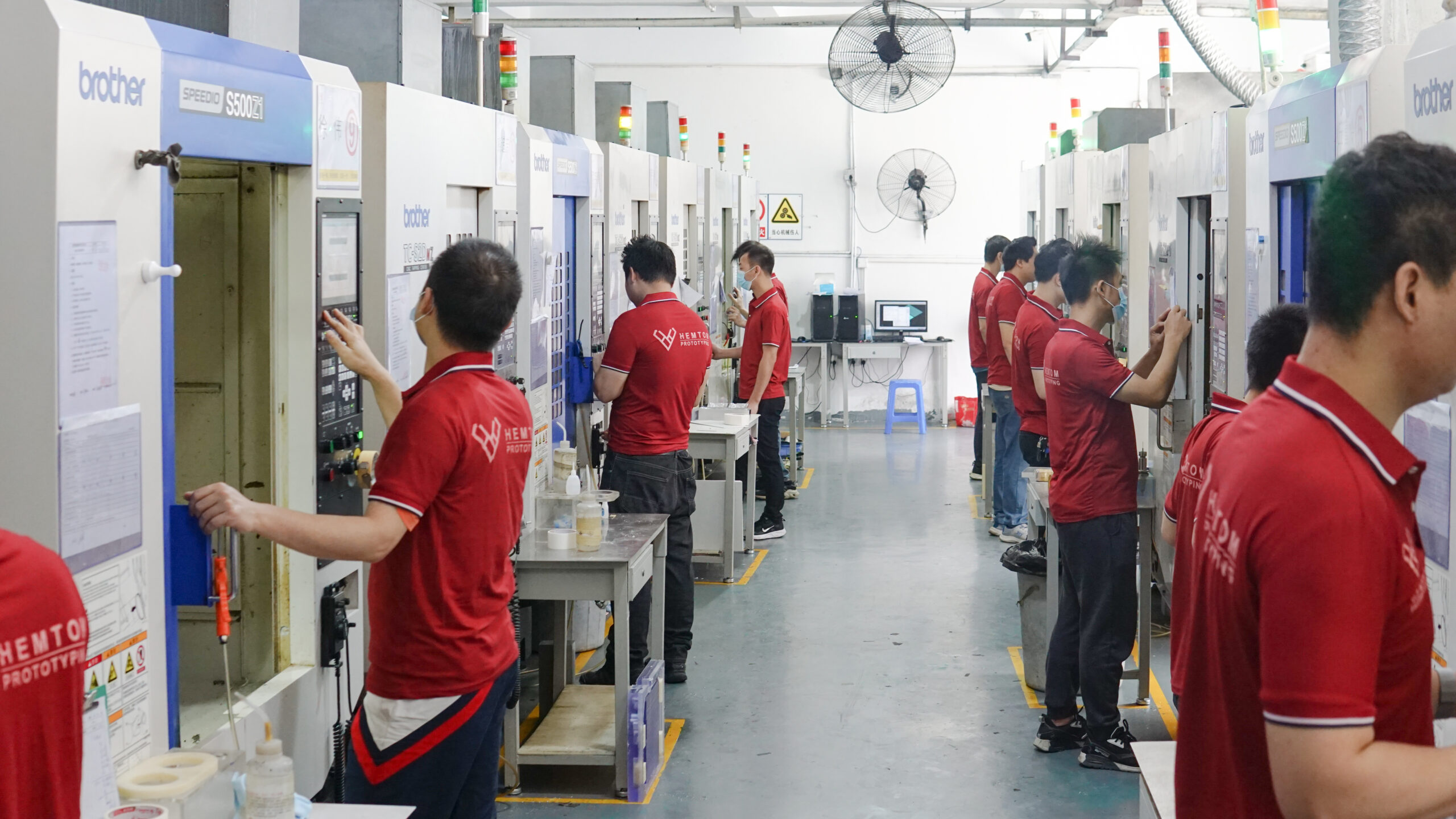
Manufacturing Capability Behind the Prototype
Hemtom has focused on prototype manufacturing and related production services for more than 20 years. Its manufacturing capabilities include CNC machining, 3D printing, injection molding, vacuum casting and surface finishing.
- 20+ years of prototype manufacturing experience supporting product development projects.
- Multiple manufacturing processes for plastic prototypes and related prototype components.
- Dedicated manufacturing facilities including CNC, 3D printing and injection molding capabilities.
- Surface finishing capabilities for prototypes requiring a finished product appearance.
- Prototype and small-batch support for continued product evaluation after the first prototype.
Protecting Your Product Information
Prototype projects often involve unreleased products, engineering files and confidential product information. Hemtom treats customer confidentiality as an important part of the manufacturing relationship and can support NDA or NNN agreements when required.
Requirements Before Manufacturing
Instead of manufacturing from a CAD file alone, the project can also include information about material, quantity, finish, tolerances, assembly and intended use. This helps the manufacturing team understand what the prototype needs to achieve before production begins.
Have a Plastic Prototype Project in Development?
Send your CAD files and project requirements. Hemtom can review the manufacturing approach, material, finishing and prototype requirements with you.
Plastic Prototype Projects for Product Development
From appearance models to structural and functional prototypes, Hemtom manufactures physical prototypes for product development, design evaluation, assembly verification and presentation. The projects below show examples of prototype work across different product requirements.
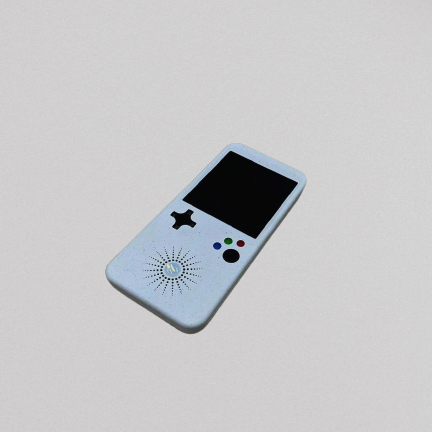
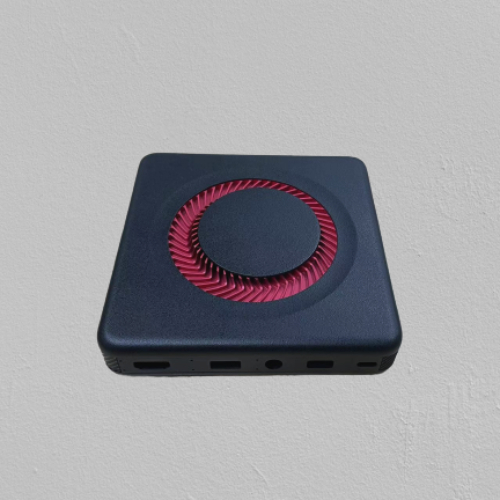
Game Console Appearance Prototype
An appearance-focused prototype for evaluating the physical form, proportions, surface appearance and overall product presentation before moving further into product development.
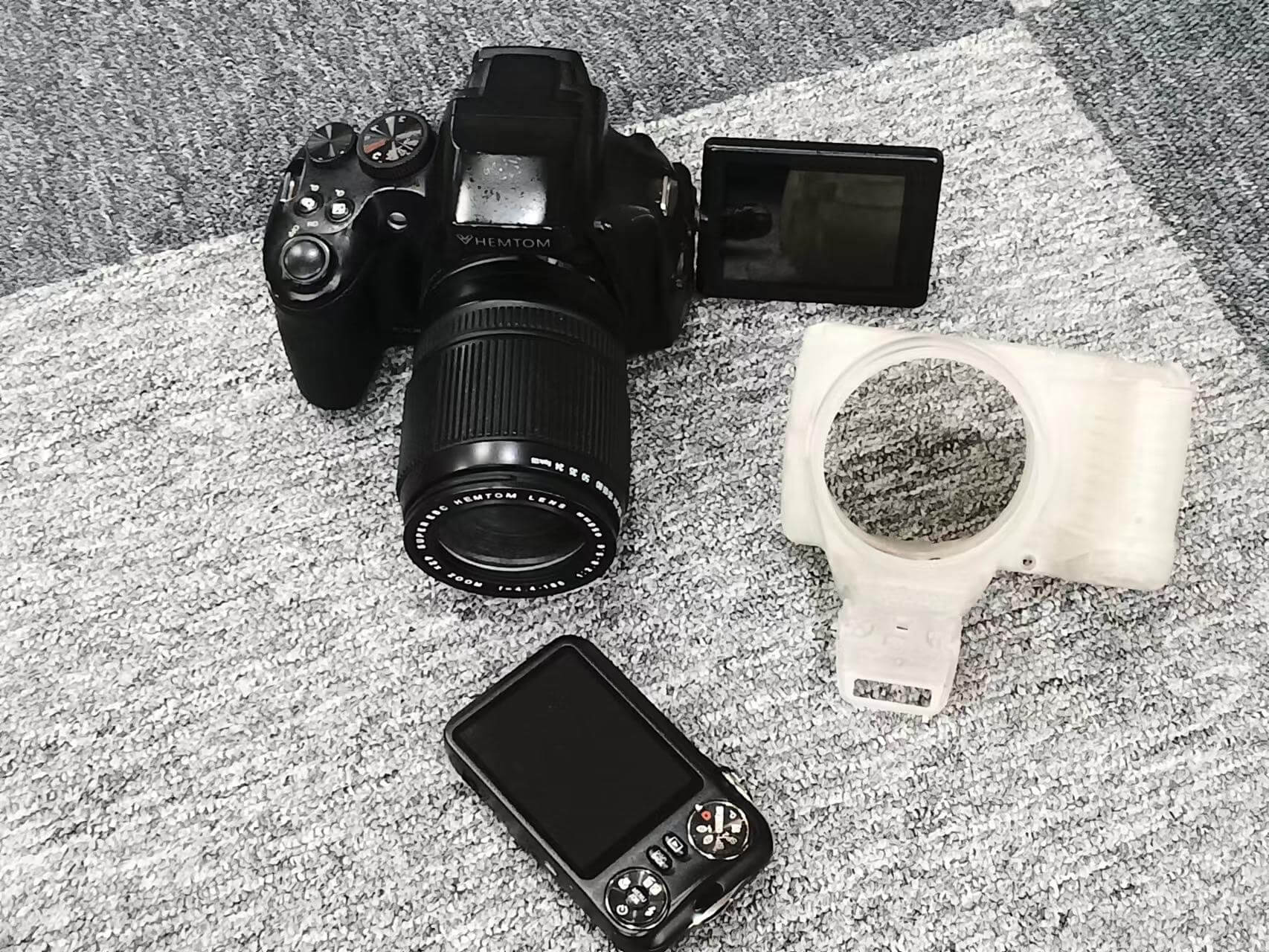
Charging Power Bank Appearance Prototype
A consumer electronics prototype focused on product form, appearance and physical presentation, helping the development team evaluate the product before production decisions are finalized.
One Product Can Require More Than One Prototype
The purpose of a prototype changes as a product moves through development. A team may first need to evaluate appearance, then verify structure and assembly, and later test selected functional features. The manufacturing process and material can therefore change according to what needs to be validated.
- Appearance Prototype for form, proportion, color and surface evaluation.
- Structural Prototype for fit, interfaces, component arrangement and physical structure.
- Functional Prototype for movement, interaction, assembly and selected functional tests.
- Pre-Production Prototype for evaluating a design using a manufacturing approach closer to production.
Real Prototype Work, Not Stock Product Images
Prototype projects can involve confidential product designs, so not every Hemtom project can be publicly displayed in detail. The examples shown here represent the type of prototype manufacturing work Hemtom provides. For confidential projects, project details and customer information are not published without permission.
Have a Product You Need to Prototype?
Send your CAD files and tell us what you need to evaluate. We can discuss the appropriate prototype type, manufacturing process, material and finishing requirements.
Get a Plastic Prototype Quote
Have a CAD model and know what you need to test? Send us your project information and files. Hemtom will review the prototype requirements, manufacturing method, material, finishing and other project details before preparing a quotation.
What Information Helps Us Quote Your Prototype?
You do not need to know every manufacturing detail before contacting us. The more project information you can provide, however, the easier it is for our team to understand the prototype requirements.
- CAD Files STEP, STP, IGES, IGS, STL or other available 3D files.
- Prototype Type Appearance, functional, structural or pre-production prototype.
- Material Your preferred plastic material, if already determined.
- Quantity The number of prototype units you need.
- Surface Finish Polishing, painting, texture, color matching or other finish requirements.
- Critical Requirements Important dimensions, tolerances, fit, sealing or functional requirements.
- Intended Use Design review, assembly testing, functional testing, presentation or evaluation.
- Target Date Let us know when you need the prototypes for your development schedule.
Not Sure Which Process or Material You Need?
That is not a problem. Tell us what you need the prototype to accomplish and provide the available design files. The manufacturing method can then be considered according to the geometry, quantity, material requirements, functional requirements and finish.
- Send your available CAD files
- Explain what you need to validate
- Tell us the quantity you need
- Share material or finish preferences if known
- Identify any critical dimensions or functional requirements
Let us know if you require an NDA or NNN before discussing your project in detail.
Frequently Asked Questions About Plastic Prototyping
Choosing a plastic prototype process involves more than selecting a manufacturing method. Material, quantity, functional requirements, surface finish and the purpose of the prototype can all affect the manufacturing approach. Here are answers to common questions before starting a plastic prototype project.
What is plastic prototype manufacturing?
Plastic prototype manufacturing is the process of producing a physical plastic model or part from a digital design for product development and validation.
Depending on the project, a prototype may be used to evaluate appearance, dimensions, fit, assembly, mechanical features, functionality or other product requirements before production.
What plastic prototyping methods does Hemtom offer?
Hemtom uses multiple manufacturing methods for plastic prototypes, including CNC machining, 3D printing, vacuum casting and prototype or rapid-tooling injection molding.
The appropriate method depends on the geometry, quantity, material requirements, functional requirements, surface finish and development stage of the project.
How do I choose between CNC machining and 3D printing for a plastic prototype?
CNC machining removes material from a plastic block and can be useful when you need a prototype made from a specific engineering plastic with machined features and a finished surface.
3D printing builds the prototype layer by layer and can be useful for complex geometries, design iterations and prototypes where tooling is not appropriate.
The better process depends on what you need the prototype to validate. If you are unsure, provide the CAD files and explain the testing purpose when requesting a quote.
What plastic is best for a prototype?
There is no single plastic that is best for every prototype. Material selection depends on what you need to evaluate.
Common prototype materials include ABS, polycarbonate (PC), PMMA/acrylic, POM/acetal, Nylon/PA and polypropylene (PP). Engineering plastics such as PEEK may also be considered when their specific properties are required.
For example, ABS and PC may be considered for different functional and appearance requirements, while PMMA may be suitable when transparency is important. Hemtom can review the intended application and recommend a suitable manufacturing approach.
Can plastic prototypes be used for functional testing?
Yes. Plastic prototypes can be manufactured for fit checks, assembly verification, mechanical features, user interaction and other functional evaluations.
The suitability of a prototype for a particular test depends on the manufacturing method, material and requirements of the test. Critical testing conditions should be discussed when requesting the prototype.
Can Hemtom make transparent plastic prototypes?
Transparent or translucent prototype parts can be produced depending on the geometry, material, manufacturing method and required surface finish.
Clear plastic prototypes may also require additional polishing or finishing when the appearance of the transparent surface is important. Tell us whether transparency is primarily required for appearance, light transmission or functional evaluation.
Can plastic prototypes be painted or finished to look like the final product?
Yes. Plastic prototypes can receive finishing treatments such as sanding, polishing, painting, color matching and other appearance treatments depending on the material and prototype requirements.
Surface finishing can be important when the prototype is being used for design review, presentation, user evaluation or appearance validation.
What CAD files should I provide for a plastic prototype quote?
Common 3D CAD formats include STEP, STP, IGES, IGS and STL. Hemtom's inquiry form also supports several other file formats.
If available, it is helpful to provide a 2D drawing, critical dimensions, tolerances, material requirements and surface finish requirements together with the 3D model.
How much does a plastic prototype cost?
Plastic prototype cost depends on factors such as part size, geometry, manufacturing method, material, quantity, finishing, assembly and functional requirements.
Because these factors vary significantly between projects, Hemtom does not use one fixed price for plastic prototypes. Providing the CAD files and project requirements allows the manufacturing team to evaluate the project and prepare a project-specific quotation.
How long does it take to make a plastic prototype?
Prototype lead time depends on the manufacturing process, geometry, material, quantity, finishing and assembly requirements.
A simple prototype made with one process may require a different schedule from a multi-part functional prototype requiring finishing and assembly. Hemtom can confirm the expected schedule after reviewing the project details.
Can Hemtom make a small quantity of plastic prototypes?
Yes. Plastic prototyping can be used for single prototypes, multiple design iterations and small-batch requirements.
The appropriate manufacturing method may change as the required quantity increases. For example, a process suitable for a few prototypes may not be the same process selected for a larger pilot quantity.
Can Hemtom assemble plastic prototypes with electronic components?
Hemtom can manufacture the physical enclosure and other prototype components and can assist with assembly when the required internal components are supplied by the customer.
Customers should provide the PCB, electronics, display or other internal components required for a functional electronic prototype. Hemtom does not provide PCB design, electronic development or software development as part of plastic prototype manufacturing.
Can I sign an NDA before sending my CAD files?
Yes. If your project requires confidentiality before detailed technical information or CAD files are shared, let Hemtom know during the inquiry process.
Hemtom states that NDA or NNN agreements can be arranged when required for confidential projects.
Still Not Sure How to Prototype Your Part?
Send your CAD files and explain what you need to validate. The manufacturing method, material and finishing requirements can be reviewed based on your project.